How big do British Shorthairs get?
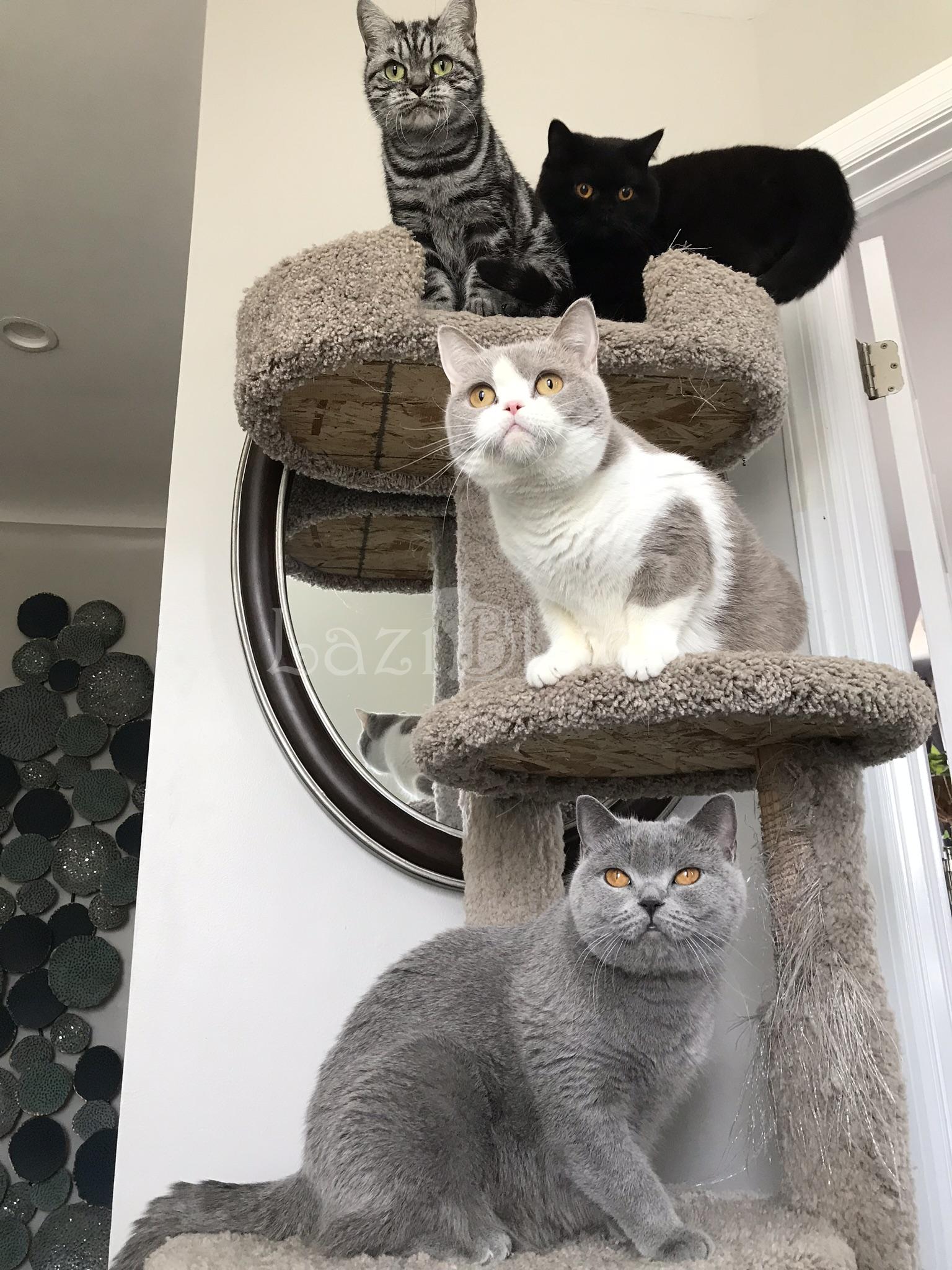
British Shorthairs are a medium to large breed, and one of the slowest to mature. Many owners are surprised that a kitten that seems fully grown at a year old keeps developing for years afterwards.
This guide explains how big British Shorthairs get, what growth looks like week by week and year by year, and how to keep your cat healthy as it reaches its full size. It is written by Zina Lemesh of LaziBlues, who raises British Shorthairs in Westchester County.
Typical adult size
Adult British Shorthairs are compact and muscular rather than tall. Females are usually smaller, commonly weighing somewhere around 7 to 12 pounds, while males are often larger and heavier, commonly in the range of 9 to 17 pounds. These are broad ranges, and healthy individuals fall on either side.
The breed is described as cobby, which means short-legged, broad-chested and sturdy. A British Shorthair can look larger than its weight suggests because of the dense coat and wide frame. The best measure of a healthy size is body condition rather than a number on the scale.
Kitten growth month by month
Kittens grow quickly in the first six months. They typically double their weight in the first couple of weeks and continue to gain steadily until adolescence. By twelve to sixteen weeks, when a kitten usually goes home, it is lively, confident and still small enough to fit in two hands.
Between six and twelve months growth slows down but does not stop. Your kitten may look leggy and a little awkward at some stages, and then fill out in a different area. This is normal, and the breed is known for developing late.
When is a British Shorthair fully grown?
Most British Shorthairs reach their full size and body type at around three to five years of age. Males in particular continue to broaden in the chest, face and jowls well after their first birthday.
That means a two-year-old may still be changing shape. Plan on feeding a food appropriate for growth early on, and move to an adult diet when your vet recommends it.
What affects size
Genetics are the biggest factor, including the size of the parents. Sex matters as well, with males typically larger. Diet, activity and spay or neuter timing also influence how a cat fills out.
Ask your breeder about the parents’ sizes and the line they come from. Seeing the adult cats is a good indication of what a kitten may grow into.
Keeping a stocky breed lean
Because the breed is naturally stocky, it can be hard to tell when a British Shorthair is carrying extra weight. You should be able to feel the ribs under a thin layer of fat, and see a slight waist when looking from above.
Measure meals, limit treats and schedule daily play. Wand toys, puzzle feeders and a tall cat tree encourage movement. If you are not sure whether your cat is at a healthy weight, ask your vet to score its body condition at each visit.
Does size affect health?
Excess weight is one of the most common health problems in pet cats, and it can contribute to diabetes, joint pain and shortened lifespan. Staying lean is one of the best things you can do for a British Shorthair.
A sudden change in weight, in either direction, is worth a call to your vet, as it can signal underlying illness.
Choosing a kitten with your future cat in mind
When you meet a kitten, think about the adult it will become. A well-bred British Shorthair has a round head, short, strong neck, thick legs and a dense coat, even at a young age.
If you would like to know more about the parents of our kittens and how big they are, contact us. We are always happy to talk about the cats behind each litter.
Frequently asked questions about size
Owners often ask whether their kitten is too small or too large. Kittens grow in spurts, and the breed is slow to mature, so a smaller kitten at four months may catch up later. If you are worried, your vet can weigh your kitten and advise whether it is on a healthy curve.
Another common question is whether a very large cat is healthier. The answer is no: a lean, well-muscled cat is healthier than a heavy one, regardless of frame.
If you want to know more about how our adult cats compare, contact us and we will share what we know.
A word on growth charts
Growth charts can be useful, but they are only a guide. Kittens of the same breed, and even of the same litter, can grow at different rates. What matters most is that your kitten is active, eating well and gaining weight steadily at each visit to the vet.
Weigh your kitten once a week at first, using a kitchen scale, and note the numbers. If you see a plateau or a loss, call your vet.
Your breeder can tell you how big the parents are and how the previous kittens developed, which is the most useful guide of all.
Talk to LaziBlues
LaziBlues is a home cattery in Westchester County, New York. See the coats we raise on our kittens page, read more frequently asked questions, or contact us to ask about an upcoming litter. You can also call 914-421-0505.